
Liberation day (No, not that one)
On May 5th we remember those who fought and died for a free Denmark and a free Europe.

Today is the 80th anniversary of Denmark’s liberation it’s a day which will be filled with celebrations, speeches from priests, politicians and historians. When students meet for the morning sing-a-long they will surely sing one of many songs commemorating this day; En lærke letted (“A Lark Ascended”) 1st stanza translated below and performed beautifully by our Public Broadcasters girl’s choir.
A lark ascended and thousand followed,
a flood of singing suffused the air.
A thousand towers began to ring out,
the sound of bells echoed everywhere,
and red and white hung for all to see,
and it was springtime and Denmark free,
yes, Denmark free.
This brings us to what I want to write about today; a brief overview of Denmark’s history in World War 2.
The occupation begins.

On the early morning of the 9th of April 1940 German troops crossed over the border into the Jutland peninsula while German bombers roared over the capital city, Copenhagen. Nazi Germany presented the Danish government with an ultimatum; either Denmark surrender or the Germans would be ruthless in overrunning us. The Danish army which had been underfunded and neglected was in no shape to fight, especially with bombers circling menacingly. The King acting as a representative of elected government signed a memorandum of understanding with Germany, which allowed German troops being stationed on our soil, while the Government still maintained domestic control. This system of occupation while maintaining civilian control is commonly referred to as Samarbejdspolitikken (the collaboraion policy) by both historians and the public. Due to the occupation lasting 5 years I will from this point on focus on specifics happenings due to trying to cover the whole story would be too big a piece of work.
Censorship
The continuation of civilian governance in Denmark at first allowed most democratic freedoms to remain, there was censorship, which meant that Danish artists had to write in metaphor when condemning the occupation, most famously with the song Man binder os på mund og hånd “They try to tie us, lips and hands” which on it’s surface is a song about the pressures to marry and the lovelessness that these led to, but at the same time it is clearly a jab at the occupation. A well-known Danish poet, priest and theologian Kaj Munk, who had earlier been fascinated with fascism before turning against it after the Italian invasion of Ethiopia and learning of the German persecution of Jews wrote a play about the Danish folk hero Niels Ebbesen who in the early medieval age killed a tyrannical German duke occupying Denmark. The message was not lost on censors and the play would only be performed after Liberation and Munks death, he was murdered by an SS terror cell in 1944. Many resistance groups would also organize illegal presses.
Internment of Danish communists
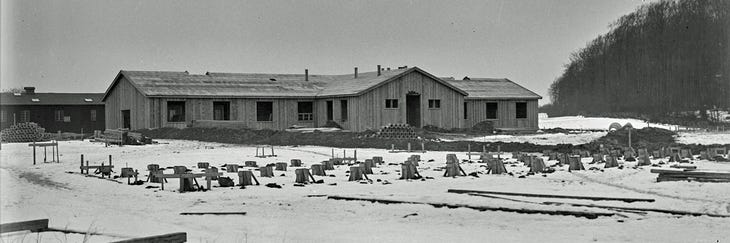
On the 22nd June 1941 when the order was given for German troops to break it non-aggression pact with the USSR an ultimatum was also presented to the Danish foreign ministry, which, while mostly aimed Soviet citizens found present in Denmark also included a demand that high-ranking Danish communists, including their 3 MP’s be interned. The Danish communists had been active in the fight against fascism with many breaking the law to fight for the Popular front in Spain, but after Molotov-Ribbentrop they toned down their anti-fascism. The Danish police already had a list of Danish communists, compiled along with a different list of Danish Nazis due to the police spying on political extremists during the interwar years.
This was a huge breach of constitutional rights, with communist being arrested without a warrant or an arraignment (The constitution demands that a suspect is put before a judge within 24 hours for them to be allowed to keep them detained) not to mention the Danish Communist Party was a legal political party protected under the freedom to form associations and freedom of speech and thought. A month later the parliament retroactively legalized the internment with the argument that the communists rights could be suspended during a state of exception. The 3 communist MP’s had escaped arrest and went underground so the passing was unanimous. As the wars favor turned against Germany and the Danish civilian government resigned due to refusing to execute Danish citizens the communists would be deported to concentration camps where 22 would die.
All in all 300 would be interned during the war. The few still living and their families are still fighting for an official apology from the Danish State, which it shamefully has not given yet. While communists at first did not resist the occupation they would make up by becoming a very important part of the resistance after the German invasion of the USSR.
The August uprisings
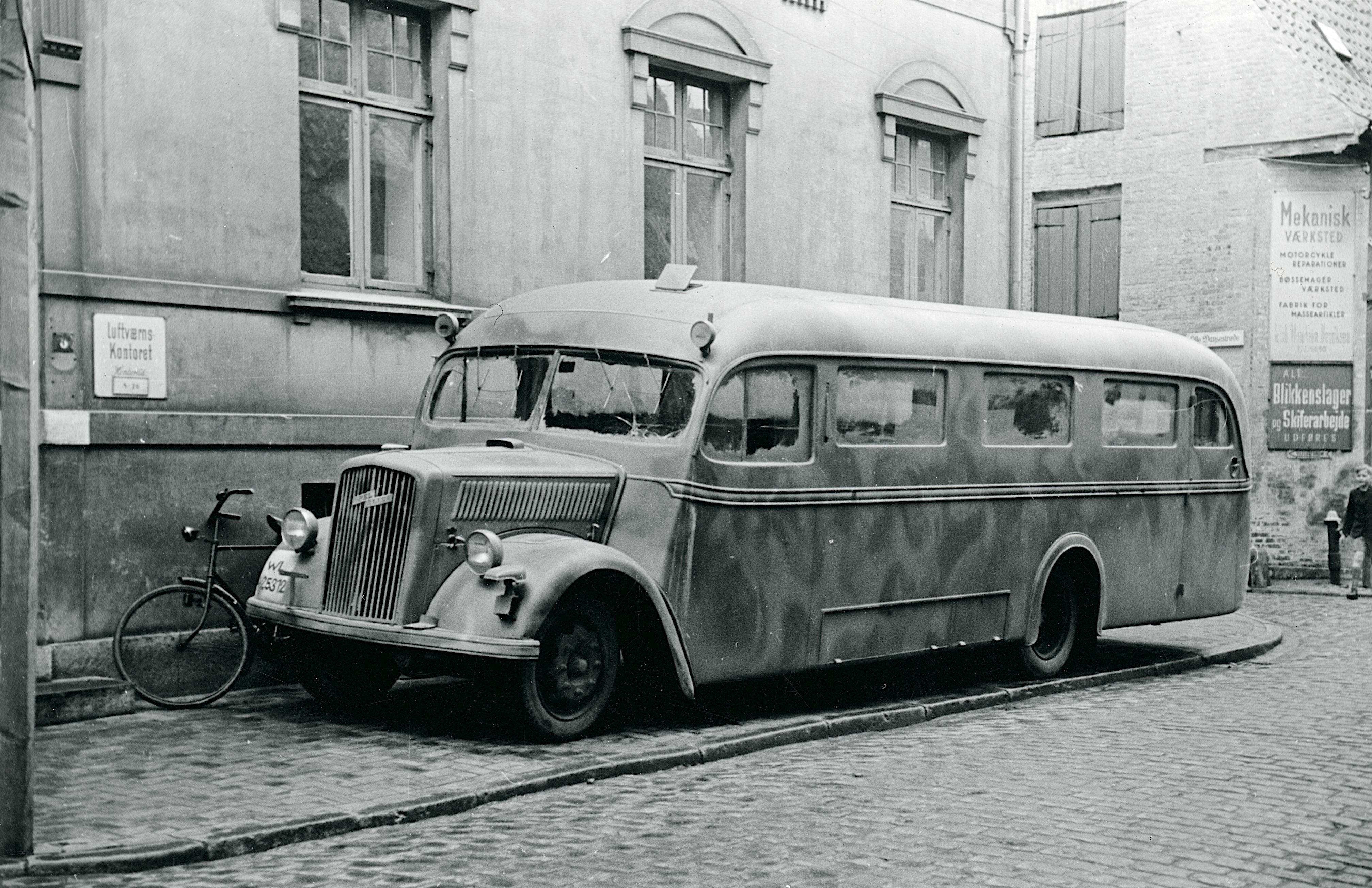
As the war went on, unrest began to stir and the Germans demands became more and more draconian. An absurd event was the Telegram Crisis of 1942 crisis, in which the Germans toughened their stance after Hitler became enraged on his birthday when the greeting card he received a perfunctory birthday telegram from the Danish king Christian X instead of a personally written greeting. This led to Hitler expelling Danish diplomats and replacing the former German plenipotentiary, a diplomat with Werner Best, an SS-general. (Some stoic, confident übermensch Hitler was.)
The mood would turn even more against the occupation as new came of the fall of Mussolini in Italy and Soviet victories in the East. This gave an impression that the fall of Nazi tyranny was nearer than it actually was. Sabotage actions rose greatly in June with railways and firms that supplied the Germans as primary targets. This led to German demands of curfews in larger cities, this while the resistance movement encouraged striking.
The uprisings began in Odense (pop. 97.415) where shipyard workers had been on strike due to opposing the German hired sabotage guards, the uprisings and sabotage spread to the rest of the nation with daily clashes between Danes and German soldiers.
The deteriorating situation led the Germans to demand parliament vote in favor of martial law, which would ban strikes, impose nationwide curfews and sabotage should be punished with death. This was the straw that broke the camels back and the government and parliament resigned rather than legitimize the German demands. The samarbejdspolitik had ended and Denmark would be under German military rule for the rest of the war.
The rescue of Danish Jews
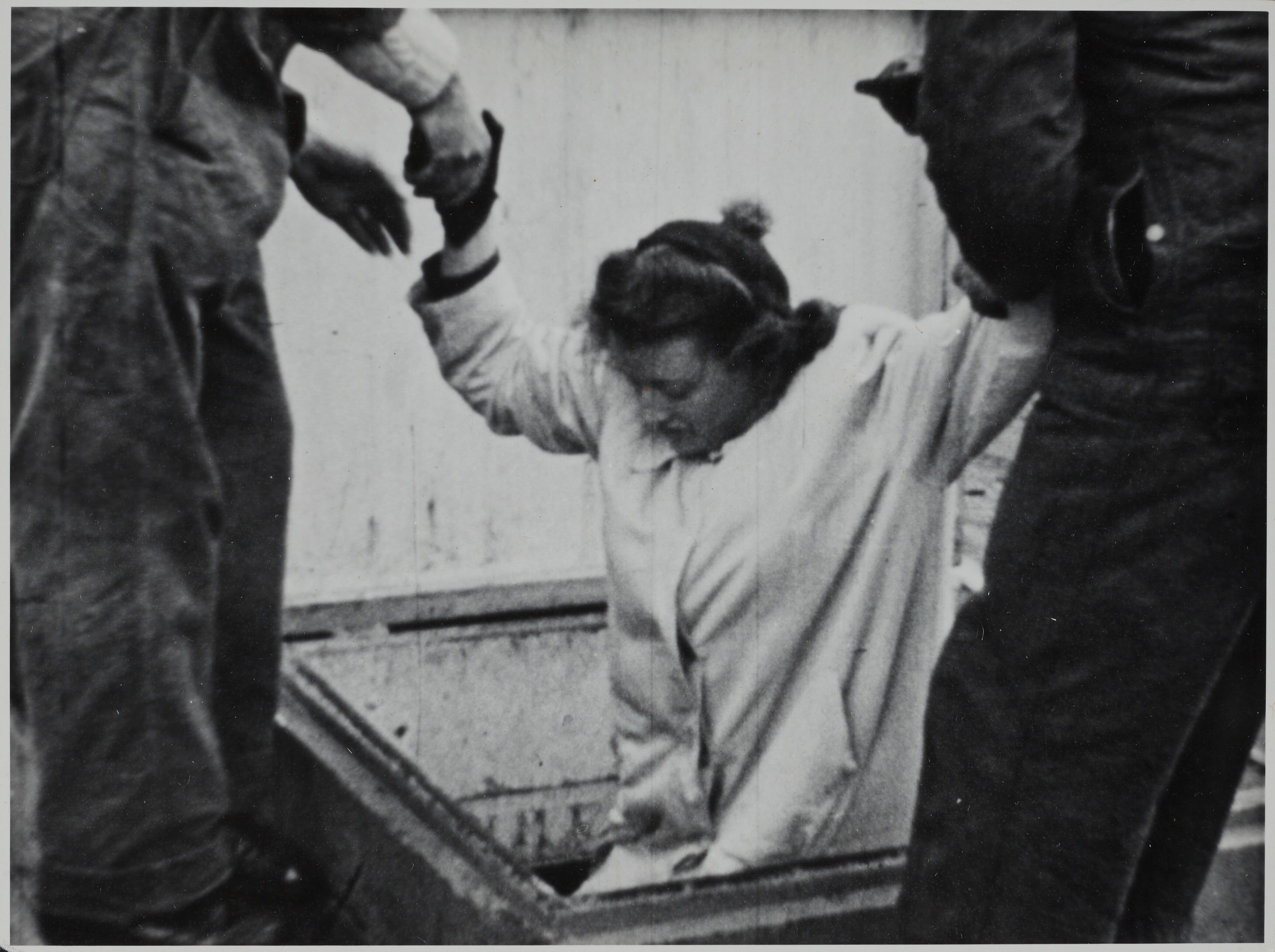
Due to the samarbejdspolitik Danish Jews had up until 1943 escaped the infamous yellow stars of David and deportation. With a small (about 7-8000 out of approx. 3.8 million) Denmark’s Jews were mostly concentrated around the capital of Copenhagen with a few hundreds scattered around the rest of the nation. While Denmark was not free of antisemitism and had prior to the war had a pretty restrictive policy for Jewish refugees most Danes saw Jews as fellow citizens and as Danish as anyone else.
This would not last as Werner Best would write to Hitler and encourage action to be taken against Danish Jews, Hitler would order the deportations on the 28th September and the deportations would begin the 1st October. High ranking Danish Social Democrats would be informed of this from Werner Best’s advisor G.F. Duckwitz after which they (The Social Democrats) would send out a warning the Jewish community. Historians debate exactly why Werner Best let this info slip, some historians speculate that Best knew that the war had turned against Germany and did not want to pay for the crimes deportation would lead to.
The Danish resistance would organize an enormous rescue action by planning routes for the fleeing and raise large amounts of money to pay the fishermen who would ferry Danish Jews to safety. Not only the resistance helped them flee ordinary Danes in all layers of society would help by sheltering or transporting them. 7000 Jews would escape to Sweden. Sadly 500 Danish Jews would still end up in concentration camps with 52 dying.
The aftermath and some personal stories
On this day, 80 years ago the surrender of occupying forces took force. A government composed half of representatives from the Danish Freedom Council and half from the already existing major political parties would be formed and hold onto power until new elections and would until then maintain order and arrest those who had informed Germans about the resistance or otherwise profited. Researching and translating this has already been a large effort for me so I will not go into much more detail of the aftermath in this article. I will say that outside of just being on the right side that the Danish resistance’s courage had a great effect on Denmark’s prestige since it made it clear that we were not only a nation marching to the rhythm of the Nazi war machine but also a people yearning for freedom. This made sure that Denmark would be treated as a occupied nation and not as an Axis member. The rescue of Jews saved thousands of lives and is rightly seen as a point of pride.
The times of World War 2 is only ever getting further and further from the present and few members of the resistance still live, but we try to keep the memory alive with this day and the songs we sing, the books we write and the films we film. I would also like the share some personal stories from my granddad, who sadly passed away in march. He was six years old when the war ended so his memories do not include much action outside of the time saboteur bombs blew so loudly that they shattered the windows in the outhouse or the time he threw rotten eggs at German soldiers or how wild the celebrations were when liberation came. He would later work as a carpenter and him and his workmates would find old weapons in attics from the time of the occupation.
I would definitely be interested in writing deep dives on the Danish resistance groups, KOPA/BOPA (Communist/Civil Partisans), Hvidstengruppen (Resistance group based out of a tavern in Hvidsten), Holger Danske (Conservative resistance group named after Ogier the Dane, a legendary paladin of Charlemagne who is said to be sleeping until Denmark is in peril at which point he will awake and save the nation) and Churchillgruppen (The Churchill club, the 1st organized resistance group formed by Conservative teens fed up with the adults not resisting).
Thank you so much for reading this far. I apologize if there are any grammatical or spelling errors.